

Press play to listen to this blog.
Hydrogen is scaling fast. In many cases, safety systems are not scaling at the same pace.
As projects move from pilot units to multi-plant, gigawatt-scale facilities, the risk profile might fundamentally remain the same, but the scale of consequences grows significantly.
Hydrogen behaves differently from conventional fuels in ways that impact your operations. It has a wide flammability range, low ignition energy, and high diffusivity. Leaks disperse quickly but can ignite more easily, often outside expected zones. These characteristics make detection, containment, and ventilation design more critical than in traditional hydrocarbon systems.
The question is not whether risks exist. It’s whether your safety systems can scale at the same pace as production and are designed from the outset.
Hydrogen is moving from pilot projects to industrial-scale deployment. Research suggests it could supply 10–12% of global energy demand by 2050.
As the systems scale, they become more interconnected. The operating windows tighten, and the margin for error decreases. Small deviations that were manageable at pilot scale can become harder to detect and control at full scale.
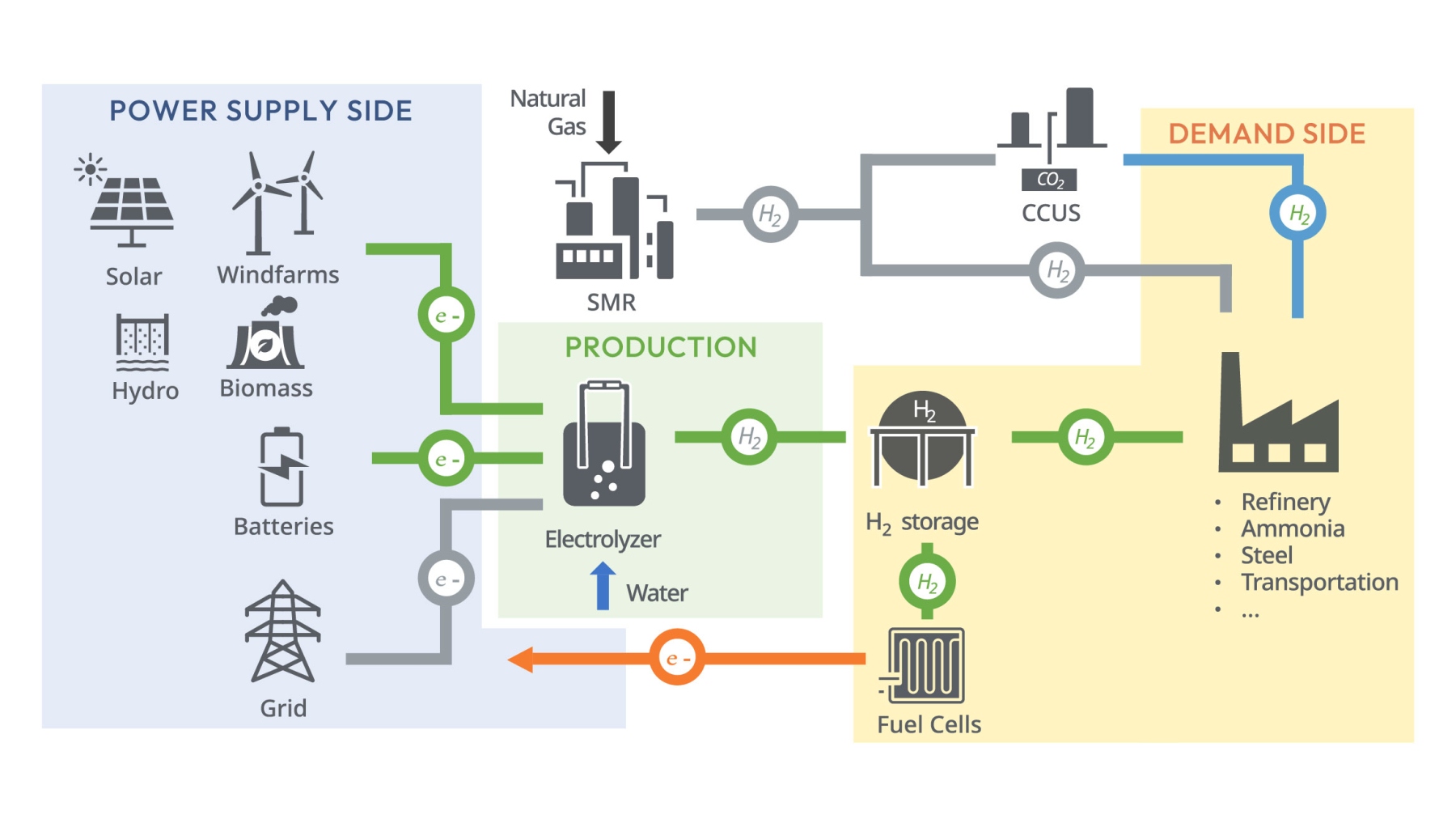
Your hydrogen production risks will vary by process and operating conditions:
Across all methods, incidents are often driven by how hydrogen behaves within your system, not just the process itself.
Key drivers include:
Most recorded incidents are contained leaks or near misses rather than catastrophic failures. Risk becomes manageable when your systems detect and control failures early, before they escalate.
Real-time monitoring becomes more important as hydrogen systems scale. Leak detection thresholds, dispersion behavior, and ignition risk are more difficult to predict than in hydrocarbon systems. This means you need continuous validation between expected and actual operating conditions, especially during transient or upset conditions.
The biggest shift is moving from reactive safety to predictive safety.
Digital twins play a critical role in this transition. Using process simulation tools such as Petro-SIM®, operators can model system behavior, test failure scenarios, and validate performance under real operating conditions before issues escalate.
Modern hydrogen facilities combine:
Facilities using automated detection and remote isolation have recorded significantly fewer ignition events compared to earlier systems.
The critical mindset shift is this:
Hydrogen systems must be designed with the assumption that leaks and abnormal events will occur. Therefore, your digital monitoring systems must detect, isolate, and neutralize them immediately.
Beyond safety, digital monitoring platforms also support broader operational objectives, including real-time optimization and greenhouse gas emissions tracking aligned with regulatory frameworks such as RFNBO (Renewable Fuels of Non-Biological Origin).
Hydrogen safety is not a barrier to growth. It is an enabler of reliable scale.
As hydrogen scales, the safety performance will determine operational reliability and project viability. The facilities that succeed will be those that embed safety into system design rather than bolt it on after deployment.
To explore the full analysis, including real incident data, safety frameworks, and intelligent monitoring strategies, read the full article.