

To listen to this blog press play.
Refineries have reported emissions for years. What is changing is the level of scrutiny. Today, the question is whether those numbers can be explained and defended under operational and financial review.
This shift is driven by expanding environmental, social, and governance (ESG) disclosure requirements and greater transparency expectations. As a result, your emissions reporting must reflect what is happening inside the refinery energy and utilities system. Many times, these systems lack the ability to optimize energy use. They focus on reporting rather than cost reduction.
At its core, refinery emissions are primarily an energy system issue. Energy consumption is the dominant driver of emissions. When energy systems operate inefficiently, both emissions and cost rise. When energy use is optimized, they fall.
In most refineries, emissions rise or fall through the same operational levers that influence energy efficiency: heater firing rates, fuel gas management, steam balance, and power generation decisions.
Modern disclosure frameworks require emissions data to be auditable and consistent with operational activity.
Emissions must be traceable to operational drivers such as fuel combustion, utilities operation, flaring behavior, process unit loads, and energy imports. Without that traceability, reported emissions totals can become disconnected from plant performance. This is why emissions management is increasingly tied to operational data reconciliation and auditable calculations.
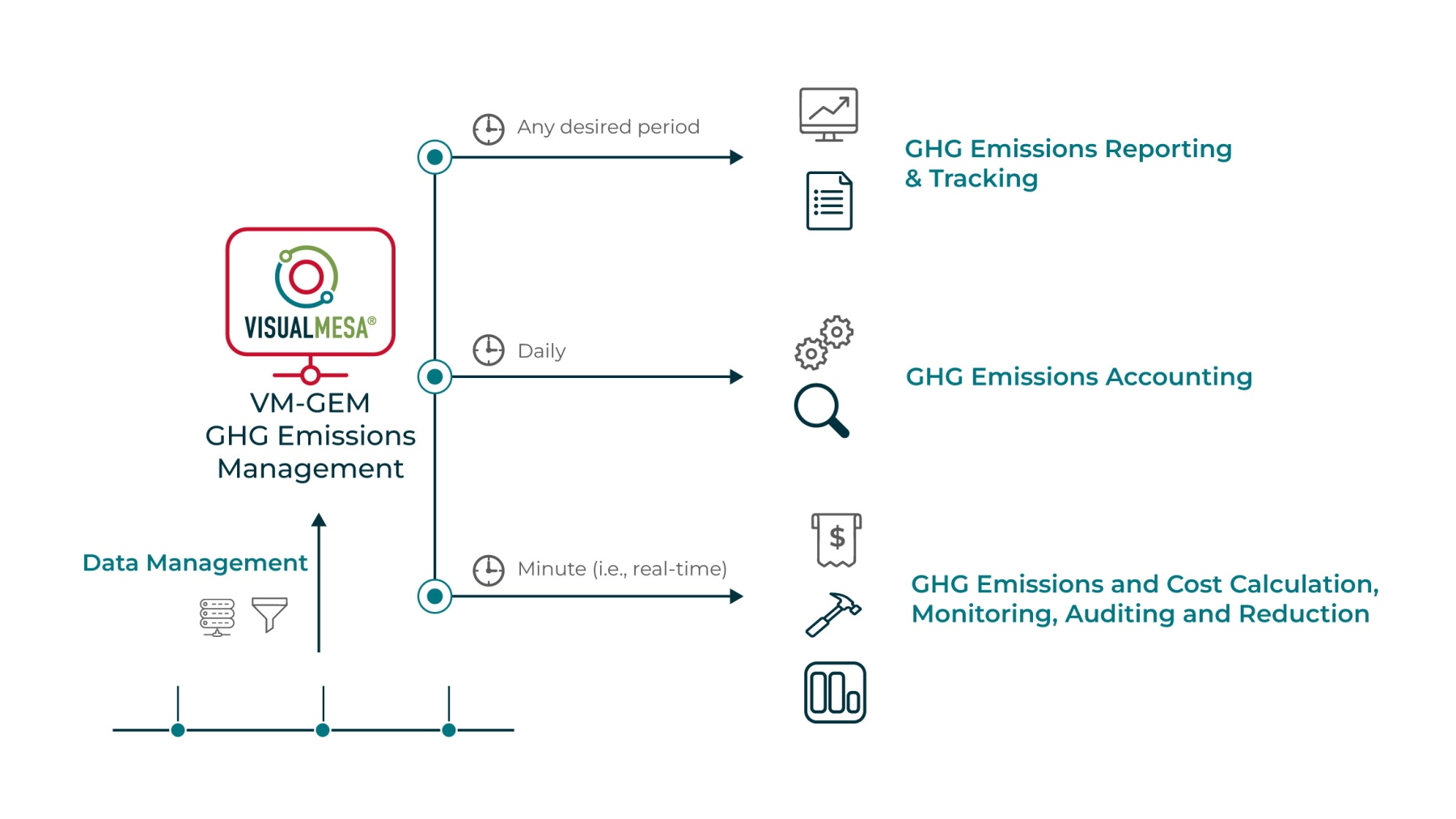
Our Visual MESA® Greenhouse Gas Emissions Management (VM-GEM) software connects operational monitoring, reconciliation, and reporting in a single workflow. This allows emissions data to be traced directly to refinery energy system performance, as shown in Figure 1.
Historically, refinery energy management focused primarily on operating costs. Today, operators need visibility into both cost and emissions performance. Fuel selection, heater duty, power generation and steam balance decisions influence both. When emissions are calculated only after the fact, you may miss opportunities for cost optimization.
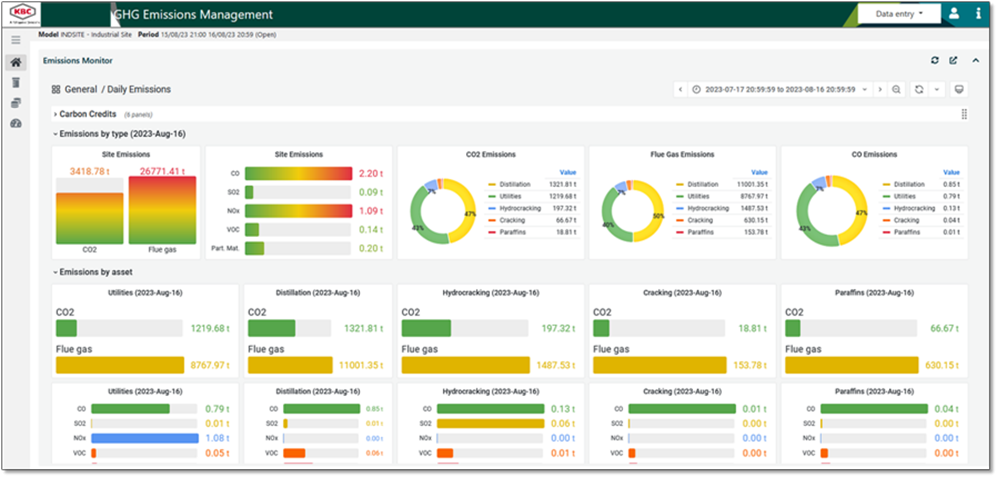
Refinery energy systems are highly dynamic. Steam loads, fuel compositions, and equipment duty levels change as production conditions evolve. When emissions are monitored in near real time, operational deviations become visible. Operators can respond while decisions are being made about fuel selection, steam balancing, power generation, or equipment loading with direct impact on both costs and emissions.
Dashboards such as those shown in Figure 2 help operators see how changes in the energy system influence emissions across the refinery.
To support this shift, many refineries are implementing VM-GEM. These systems extend operational monitoring by calculating emissions directly from plant operating conditions.
VM-GEM calculates emissions using actual operating conditions such as fuel composition, firing rates, equipment loads, and power imports. It also maintains reconciliation across daily, monthly and annual reporting cycles.
By connecting operational data with governance and reporting requirements, VM-GEM allows refiners to move beyond retrospective reporting. For your operations team, emissions become a measurable operational indicator that supports cost optimization, risk management, and credible disclosure.
In refining, emissions are not simply an ESG metric. They directly reflect how well the energy system operates.
As reporting expectations grow, your refinery’s ability to monitor, reconcile, and explain emissions in operational terms becomes essential for compliance, operational efficiency, and cost performance.
Want to explore the full technical analysis? Read the full article From Emissions Reporting to Operational Governance published in Hydrocarbon Engineering.